mindful-spending
Shopping Pause vs Wishlist: Which One Helps More?
Wishlists preserve desire. A shopping pause is designed to cool it down before checkout.
They have different jobs
A wishlist is useful when you want to remember products, gift ideas, books, gear, or future upgrades. It is a storage tool.
A shopping pause is useful when you are close to buying and want the urge to cool down first. It is a decision tool.
Wishlists can keep you shopping
Retail wishlists often live inside stores. That makes them convenient, but it also keeps you near recommendations, sales, shipping thresholds, and account-level nudges.
For impulse buying, that environment can be the problem. The item is saved, but the buying pressure stays warm.
A pause list should feel quieter
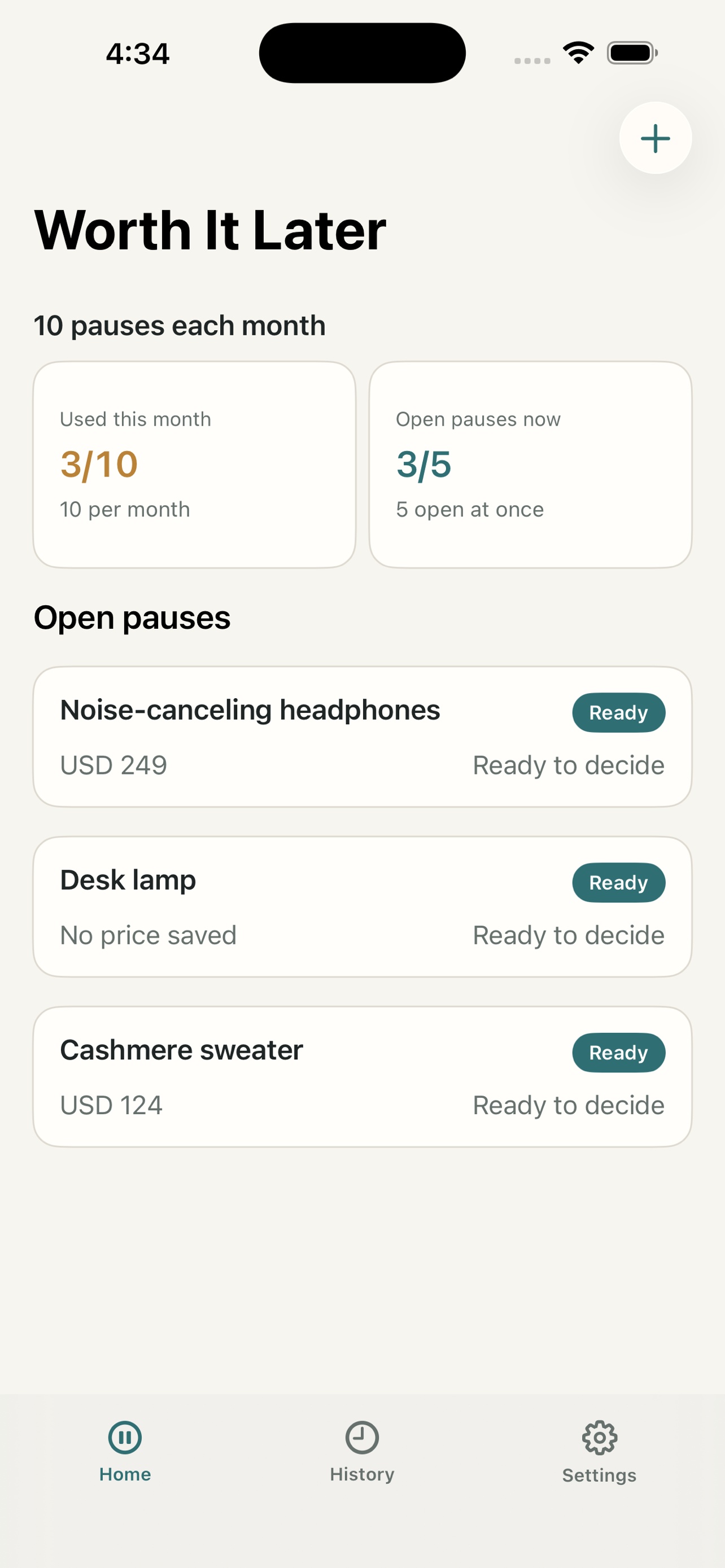
Worth It Later keeps the list focused on open decisions. Each item is there because you considered buying it, not because the app wants to recommend related products.
The useful metadata is simple: item name, price, link, note, category, pause length, and later decision.
Use both when the intent is different
There is nothing wrong with a wishlist for long-term ideas. Use it for planned gifts, research, and non-urgent possibilities.
Use a shopping pause when the purchase is active, emotional, or being pushed by urgency. That distinction keeps the habit clean.
The best test
Ask what the list makes you do next. If it makes you browse more, it is probably a wishlist. If it makes you wait and decide later, it is a pause.
For impulse buying, waiting is the feature.
Move active temptations out of retail accounts
A retail wishlist is still useful for planned research, but active temptations often need a quieter place. Saving the same item in Worth It Later gives you the link back without keeping the store interface open.
That separation is small, but it changes the decision environment. You are looking at your own note and pause status, not a page designed to close the sale.
Worth It Later
Pause the purchase before checkout.
Worth It Later helps you save a purchase, wait 24, 48, or 72 hours, then return to Buy, Skip, or Wait Longer without creating an account or connecting a bank.
FAQ
Is Worth It Later a wishlist app?
It can hold items you want, but it is designed as a shopping pause app with timers and decisions rather than a general wishlist.
Should I delete my retail wishlists?
Not necessarily. Use retail wishlists for planning and Worth It Later for purchases that need a cooling-off period.
What makes a shopping pause different?
A shopping pause has a wait time, a reminder, and a final decision such as Buy, Skip, or Wait Longer.
Can a wishlist increase impulse buying?
It can if it keeps you close to recommendations, sale prompts, and fast checkout.
