mindful-spending
How to Stop Impulse Buying Before Checkout
A simple iPhone workflow for moving tempting purchases out of checkout and into a private cooling-off list.
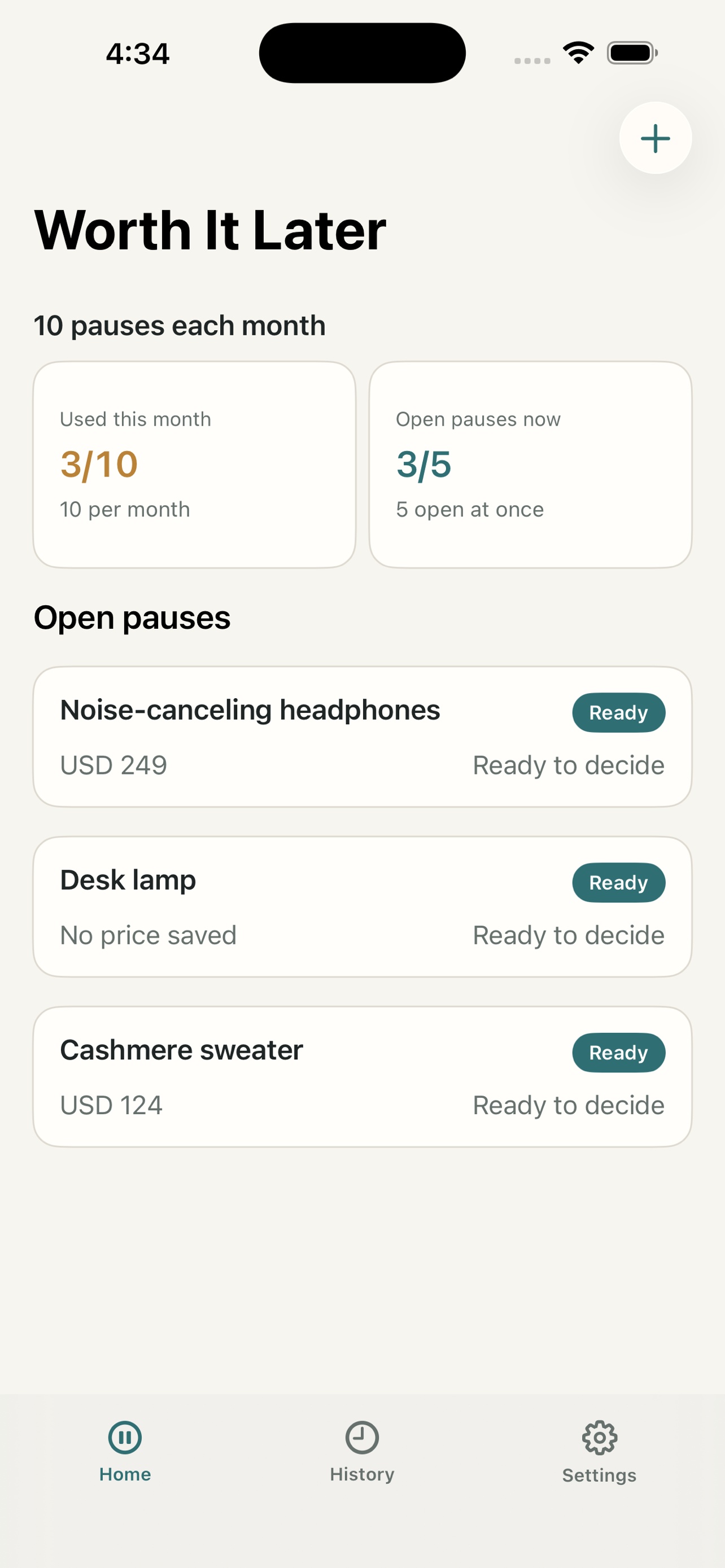
Interrupt the checkout path
Impulse buying thrives when the path from desire to payment is short. A product page, saved card, one-tap checkout, free shipping banner, and limited-time message can compress the decision into a few seconds. The most useful move is not a lecture about willpower. It is a small interruption before payment.
Worth It Later is built around that interruption. Instead of deciding inside the store, you save the item, add a price or link if useful, choose a pause length, and leave the purchase alone until the timer ends.
Use a private pause instead of a messy wishlist
A normal wishlist often keeps desire warm. It can become another shopping surface, especially when it stays close to a retailer, deal feed, or recommendation engine. A shopping pause should do the opposite: hold the item quietly while the emotional pressure fades.
Keep the record plain. The name, price, link, and one short note are enough for most purchases. If you need more than that to justify the item, that is useful signal by itself.
- Save the item name before you keep browsing.
- Write the real reason you want it in one sentence.
- Use 24 hours for small purchases and 48 or 72 hours for higher-pressure decisions.
- Return only when the pause is ready, not while the store is still pushing urgency.
Ask the questions before the reminder fires
The best checklist is short enough to answer honestly. Do I need this now? Will I still want it tomorrow? Could this money be better used elsewhere? These questions are not meant to shame a purchase. They are meant to separate a real need from a temporary mood.
If the answer is still yes after the pause, buying can be a reasonable decision. If the answer becomes no, skipping the purchase gives the money another chance to serve something better.
Why this works better on device
A shopping pause can contain sensitive context: stores you visit, products you want, prices, notes, and regret patterns. Many people do not want that turned into an account, a shopping profile, or a bank-connected data trail.
Worth It Later keeps the core pause workflow local-first. The app does not need a bank connection to help with the moment before checkout, and it does not need an ad model to be useful.
A realistic rule
Use a pause for purchases that feel urgent, emotional, expensive for your budget, or oddly hard to close the tab on. Do not try to pause every routine purchase. Groceries, replacement chargers, and planned household basics do not need a dramatic ritual.
The point is to add friction where shopping apps remove it. A good pause habit should feel light enough to use before real temptations and clear enough to trust later.
Worth It Later
Pause the purchase before checkout.
Worth It Later helps you save a purchase, wait 24, 48, or 72 hours, then return to Buy, Skip, or Wait Longer without creating an account or connecting a bank.
FAQ
What is the fastest way to stop an impulse buy?
Leave the checkout flow, save the item somewhere private, and wait before paying. Even a 24-hour pause can change the decision context.
Is this the same as budgeting?
No. Budgeting manages a broader money plan. A shopping pause focuses on one purchase before checkout.
Should every purchase go into a pause app?
No. Use it for purchases driven by urgency, emotion, social pressure, deals, or buyer-regret risk.
Does Worth It Later connect to my bank?
No. The app is designed for private on-device shopping pauses, not bank-connected budgeting.
