mindful-spending
The 48-Hour Rule for Online Shopping: How to Use It
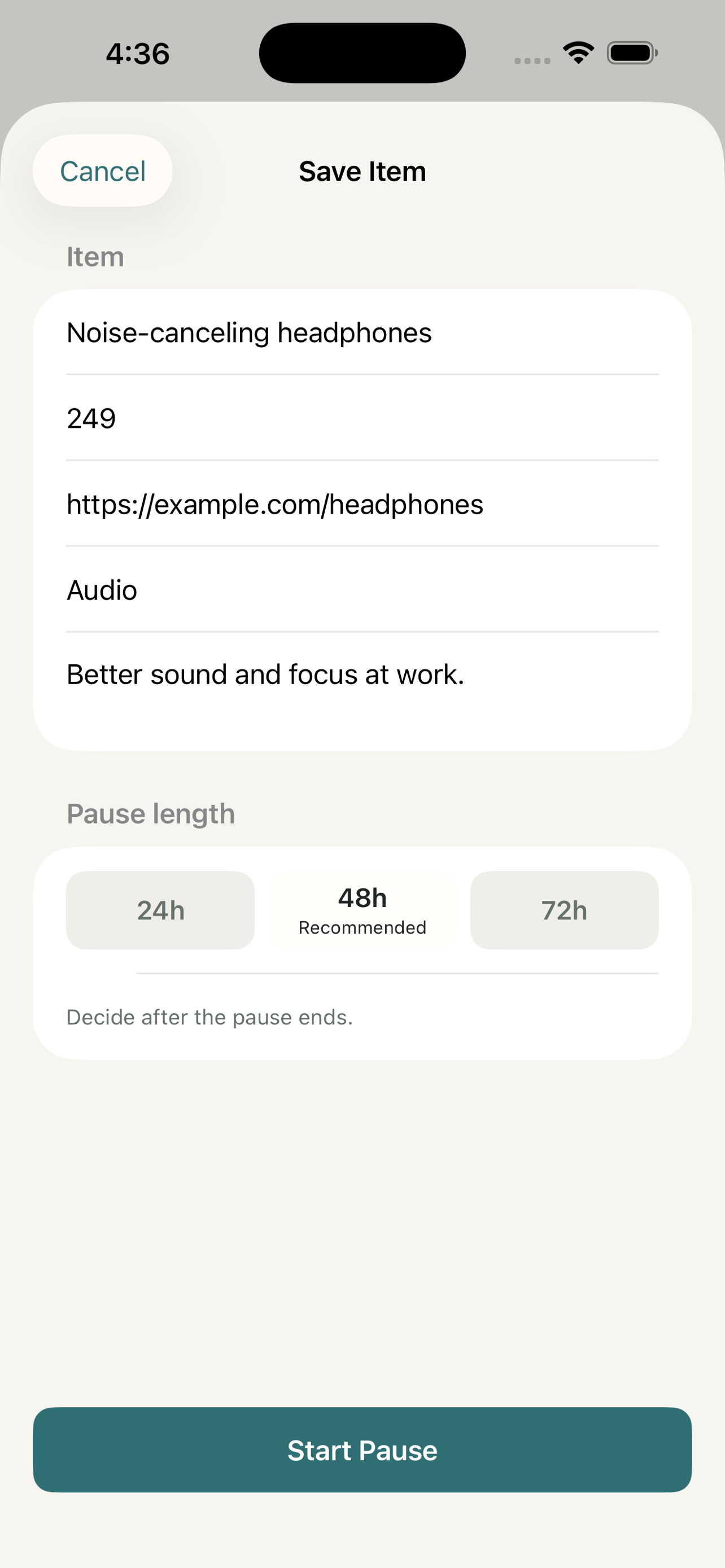
The 48-hour rule is strongest when it is easy to start, easy to revisit, and not mixed into a noisy retailer wishlist.
What the rule is really for
The 48-hour rule is not about never buying things. It is about moving nonessential purchases out of the emotional window where urgency, boredom, stress, discounts, and social proof are doing most of the work.
Two days is long enough for many small urges to cool down, but short enough that the habit still feels usable. If a purchase is truly useful, it will usually survive the pause.
Start with three pause lengths
A good system should not require a spreadsheet every time you want headphones, a lamp, a sweater, or a kitchen gadget. Worth It Later keeps the MVP simple with 24-hour, 48-hour, and 72-hour pauses.
Use 24 hours for low-risk wants, 48 hours as the default, and 72 hours for purchases that are expensive, emotional, or tied to a promotion that feels unusually intense.
- 24 hours: small purchases that are easy to return to later.
- 48 hours: the default for most wants.
- 72 hours: larger purchases, stress shopping, or anything pushed by urgency.
Do not keep checking the store
The pause loses power if you keep reopening the product page. Retail pages are built to keep the purchase attractive: reviews, scarcity copy, related products, bundles, and payment prompts are all part of the environment.
Save the link, then leave it alone. When the reminder arrives, start from your note and the item detail screen, not from the retailer page.
Use local reminders carefully
Apple's UserNotifications framework supports local notifications from an app. That matters for a shopping pause because the reminder can happen on the device without a developer server managing your purchase list.
The reminder should be quiet and practical. It is not a debt alarm or a shame message. It is a prompt to make the decision after the first wave has passed.
How to judge the result
If you still want the item after 48 hours and it fits your priorities, buying may be fine. If you are unsure, wait longer. If you barely remember why you wanted it, skip it and let the money stay available.
Over time, the useful pattern is not only how many things you skip. It is which categories keep showing up, which stores create pressure, and which purchases remain worthwhile after a pause.
Worth It Later
Pause the purchase before checkout.
Worth It Later helps you save a purchase, wait 24, 48, or 72 hours, then return to Buy, Skip, or Wait Longer without creating an account or connecting a bank.
FAQ
Is 48 hours always the right wait time?
No. It is a good default. Some small purchases may only need 24 hours, while higher-pressure decisions may deserve 72 hours or more.
What if the deal ends before the pause ends?
That is useful information. If a deal only feels good under pressure, it may not be a good purchase for you.
Can I still buy after the pause?
Yes. Worth It Later records Buy, Skip, and Wait Longer decisions without treating a purchase as a failure.
Do reminders require a server?
Worth It Later uses local reminders for the core workflow, so a developer server is not needed to remind you when a pause ends.
