mindful-spending
Mindful Spending for Online Shopping: A Simple iPhone Workflow
Mindful spending does not need a lecture. It needs one small repeatable action before checkout.
Make the habit small
Mindful spending fails when the process is too heavy. If every tempting purchase requires a full budget review, the user will either ignore the system or stop tracking honestly.
A better workflow is small: save the item, set a pause, answer a few prompts, and return later.
Separate want from checkout
Wanting something is not the problem. The problem is being forced to decide while the store is optimized for speed, urgency, and convenience.
Worth It Later creates a separate space for the want. The item still exists, but it is no longer sitting beside payment buttons and recommendation rows.
Use questions that fit real life
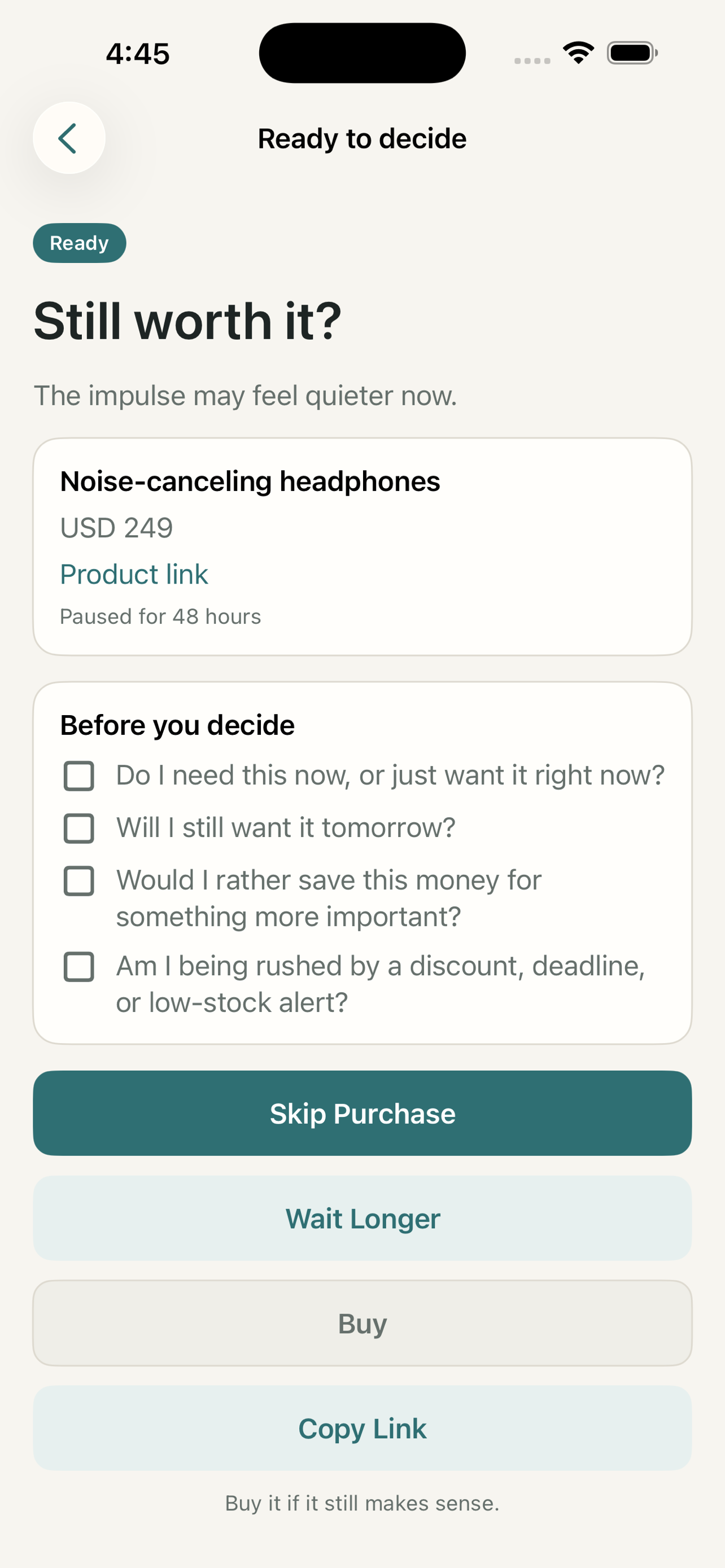
The most useful questions are ordinary. Do I need this now? Will I still want it tomorrow? Could this money be better used elsewhere?
These questions work because they are fast. They also avoid shame. The app is not telling you that wanting the item is bad. It is asking whether the item still deserves the money after a pause.
Keep privacy aligned with the goal
A mindful spending workflow should not become another data collection surface. If the app needs your shopping wants, notes, prices, and decisions, it should have a strong reason to keep that data local.
Worth It Later's core promise is no account, no bank connection, no ads, no backend for the pause workflow, and no third-party tracking SDK.
Review outcomes without over-optimizing
A recent history helps you notice patterns: late-night purchases, stress buys, repeated categories, and items that keep getting extended. You do not need perfect analytics to learn from that.
The goal is to make the next decision easier, not to turn shopping into a dashboard.
Keep the workflow close to the impulse
The best time to use the app is when the purchase first starts to feel sticky. If you wait until after the order is placed, the tool becomes a regret log instead of a decision aid.
That is why the first step should stay fast. Add the item, choose the pause, and leave the store before the urge gets another round of persuasion.
Worth It Later
Pause the purchase before checkout.
Worth It Later helps you save a purchase, wait 24, 48, or 72 hours, then return to Buy, Skip, or Wait Longer without creating an account or connecting a bank.
FAQ
What is mindful spending?
Mindful spending means slowing down enough to decide whether a purchase fits your real priorities instead of reacting to pressure.
Do I need a strict budget to practice mindful spending?
No. A budget can help, but a shopping pause works even when you only want better pre-purchase decisions.
Why use an iPhone app instead of notes?
A dedicated app can keep pause lengths, local reminders, decision buttons, and recent history in one focused place.
Can mindful spending still include buying things?
Yes. The goal is deliberate spending, not buying nothing.
